Advisor · Framework Author · AI Systems Builder
I'm more interested in why than what — and how that unlocks what comes next.
I work upstream — finding the structural flaw in how an organization understands its own situation, then building the frameworks, systems, and questions that follow from the real problem.
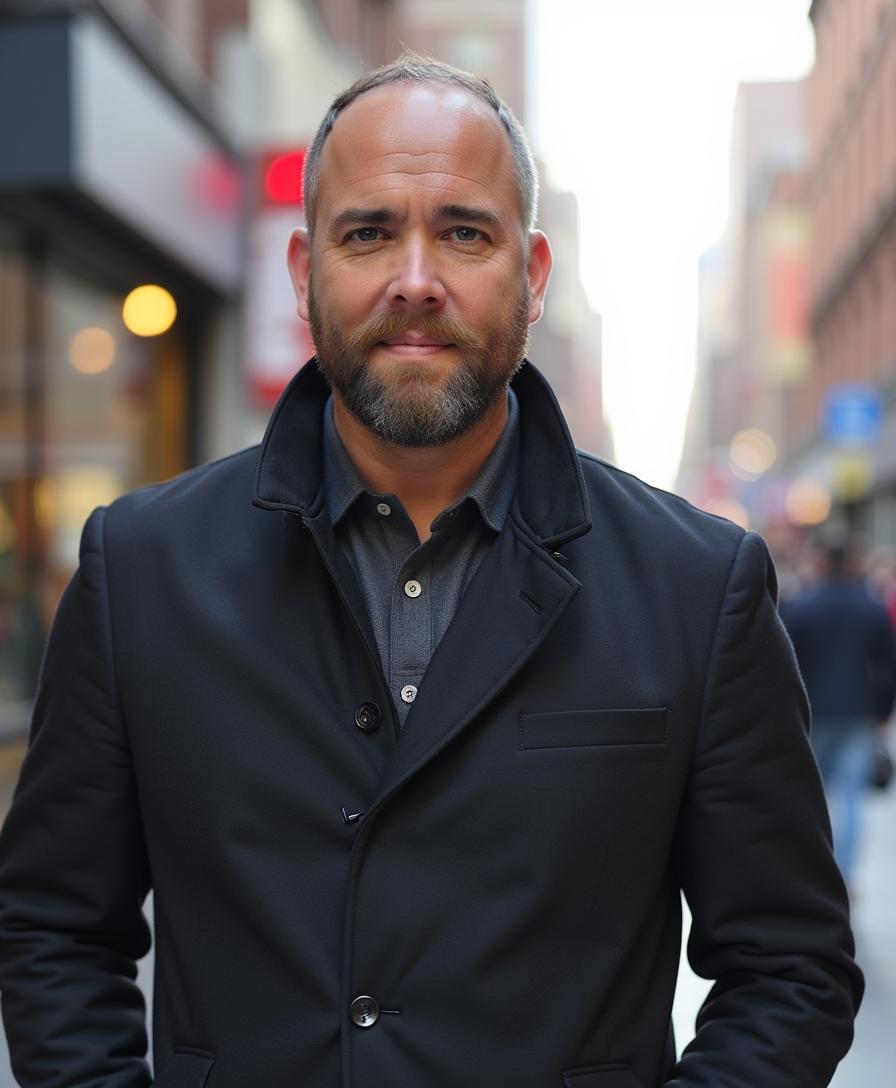
New York, 2025
The Range
I started in a chemistry lab. Moved to Fujifilm, working international regulatory compliance — TSCA and EPA negotiations — still science, but now with the added variable of institutions that don't want to move. Then Vertex Pharmaceuticals: bioinformatics, patent research, chemical modeling, early coding. Then the agency world — WPP companies doing digital strategy and transformation inside pharma (Pfizer, BI, Novartis, GSK), then iProspect, then nearly a decade scaling a hundred-person agency. Now: Points South, the SFW framework, white-label and fractional advisory, and AI systems built around the kinds of intelligence problems that research budgets keep failing to solve. The thread across all of it is the same: every system has a question it isn't asking itself. That gap is where the real work lives.
The Framework
The So F***ing What? Framework
Most organizations have built world-class research functions and called it a day. The SFW framework exists for what comes before the brief — the diagnostic layer that determines whether you're solving the right problem or just the one you already knew how to ask about. Book one is coming. Book two is already in research.
Explore SFW:Unlocked →Selected Work
A regional bank's research kept confirming that younger customers preferred branches. Nobody had asked why. When we did, the answer wasn't a preference for branches — it was a broken digital product so bad that walking in had become the path of least resistance. The millennials weren't anomalous. They were diagnostic. One cohort made a systemic failure visible by behaving differently. The real problem wasn't a branch strategy. It was a product strategy. An existential one.
Financial Services · Intelligence Architecture · Upstream Diagnosis
A consumer brand was targeting "people who want to hide skin conditions with makeup." Technically accurate. Strategically useless. The real barrier wasn't awareness — it was identity. The customer couldn't buy without making themselves the problem. So we gave them a different villain: not the condition, but the moment — the high-stakes day when control over how the world sees you actually matters. The audience that had been invisible became the majority of the market.
Consumer · Audience Architecture · Behavioral Reframe
A B2G firm was running two separate campaigns — one recruiting cleared analysts, one generating leads with cabinet-level agencies. Nobody had connected them. The analysts being recruited were earlier-career versions of the buyers being sold to. And those buyers weren't making decisions — they were justifying ones already made. Two campaigns, one underlying motivation, completely different messages. Once we found the thread, both changed.
B2G · Dual Audience Strategy · Decision Architecture
Recent Writing
Feb 2026
What If The System Already Knew The Template?On the hidden cost of rebuilding what your organization already knows — and the intelligence layer that closes the gap.
SFW:Unlocked on Substack
The full archive →Framework thinking, AI systems, and the question before the question.
If you think we should talk — let's.
francis@pointssouth.agencyNo deck required. A conversation is enough to know.